September 8, 2026
Destiny Rings Is Leaving My Desk
After endless nights turned into months of building and testing with only a few prototypes, the next batch of wearables is here. Now it’s time to put Destiny Rings around the fingers of real people.
Since the beginning, Destiny Rings has lived in a controlled environment.
From my desk to my phone. Nothing beyond.
I’ve had nothing more than three wristband wearables to build and test the system with. That’s how I shaped how Destiny Rings ultimately works:
Two devices can discover each other nearby. The wearables provide physical cues. Users can then choose to interact with each other, and that interaction can ultimately turn two people standing close by into a connection inside the app.
Validating that mechanism was a huge first step. But it means nothing without proof that people actually want to use it - that is now the question I'm finally getting closer to answering.
From Three Prototypes to a Real Beta
A few days ago, the next batch of wristband wearables arrived from Shenzhen. Not a thousand or even a hundred - but around a dozen.
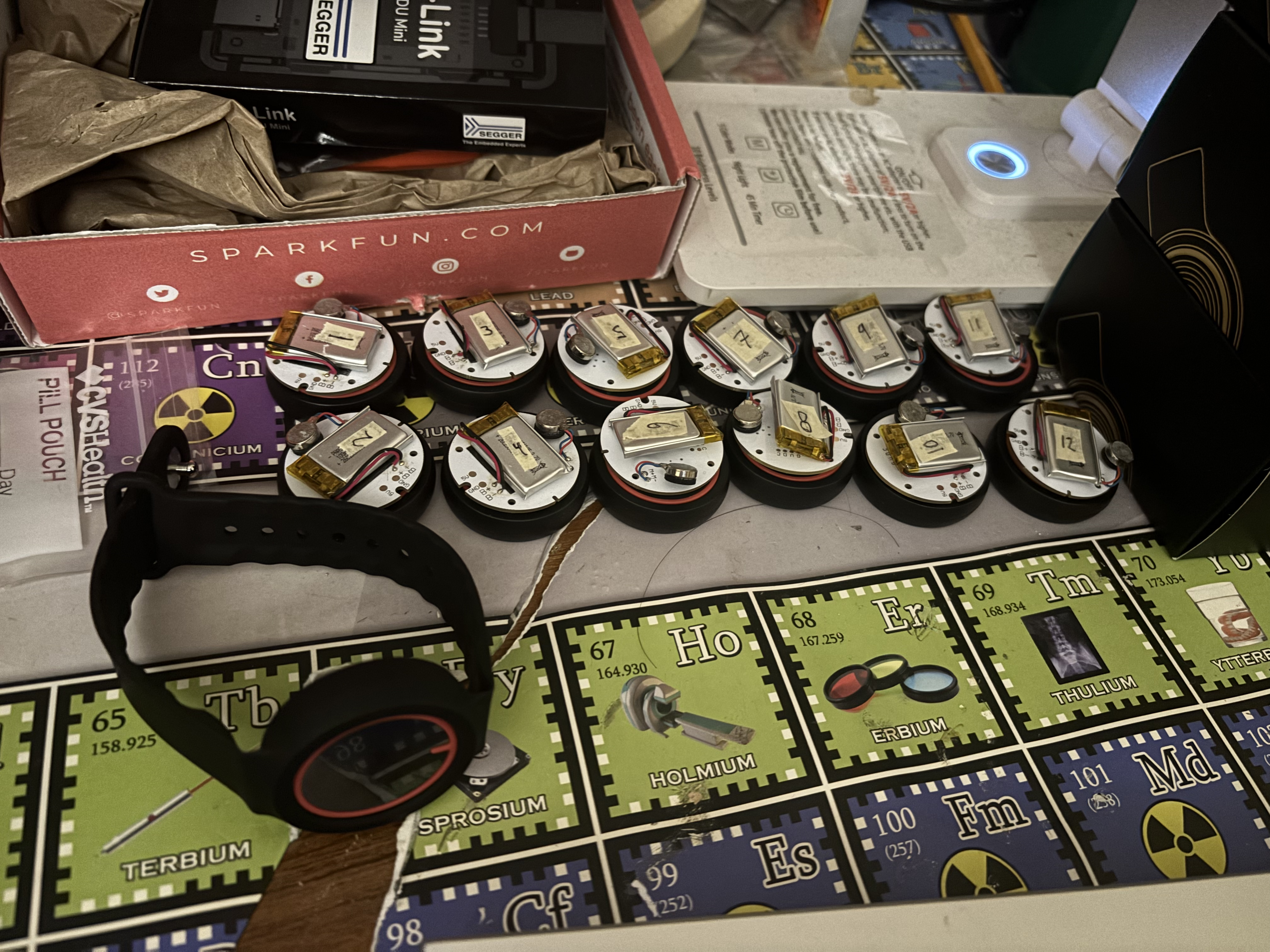
That might not sound like much, but it would be a mistake to jump to a garage full of them.
Testing to this point has been all about the technology. Answering the question:
Can I make this thing work?
Now the question starts to change.
Can other people make it work on their own?
It's one thing for me to use a product I've spent months building. I know every signal, light behavior, buzz, touch protocol, and app user experience. But no one else does.
If I have to hold someone’s hand to talk them through using Destiny Rings, then the product truly doesn’t work.
That's what this next batch will allow me to start figuring out.
A Prototype Isn’t a Product
A working wristband isn’t a finished product. It’s simply development hardware. What’s Destiny Rings without a ring?
The current goal isn’t to design the sleekest next smart ring. It's to validate the experience underneath it before committing to larger-scale hardware production.
A slew of questions lie ahead:
Does the technology reliably and consistently work?
Do people understand the cues and signals?
Does meeting someone with Destiny Rings actually feel natural?
Does that first buzz get your heart going?
And after trying it once, would you actually want to wear it again?
Those questions can’t be answered from my desk - they have to come from user experience.
Building Something Is Different From Watching It Get Used
Building Destiny Rings has made it easy to become blind to my own product.
I've spent hundreds of hours thinking about how this experience should work—every signal, interaction, and possible outcome.
A new user will spend approximately zero.
They simply won't know why I made a particular design decision. They won't care how difficult something was to engineer. In fact, they won’t even know what they’re supposed to do with the product.
This is what makes this phase of the process crucial.
I want to see where people get confused, misstep, hit a wall, or misuse the product.
I want to find all those edge cases I never would've thought to test because I've been too close to the product to see them.
A successful beta isn't one where everyone tells me how much they love Destiny Rings. It’s one where I figure out everything that's still wrong with it.
Then Comes the Real World
The first tests will be intentionally small and controlled - just a handful of people and wearables interacting together.
From there, a dozen wristbands will turn into 50, maybe 100 - all ready to test in the places I’ve been imagining:
Bars. Events. Coffee shops. Social settings. And eventually, Hoboken.
I haven’t gone a day without thinking about what happens when a room full of people isn't staring at a swipe feed on their phone. What happens when the technology fades into the background instead?
Your phone never leaves your pocket. Your ring buzzes. You look up. And maybe your perfect match is in the same room as you.
Now I get to find out whether everyone else sees the same vision.
The Real Challenge Lies Ahead
Getting Destiny Rings onto the App Store felt like a finish line for about five minutes. It wasn't. Getting the hardware working wasn't either. Neither were the prototypes, the patents, the website, or any of the other milestones along the way.
They've all just gotten me to Day 1 of Phase 2.
A few prototypes proved that the technology could work. This next batch lets me start asking whether the product can work. Those are two very different things.
Now there will inevitably be bugs I haven't found yet, interactions that don't make sense, simple necessities I missed while building for the past several months.
Destiny Rings is finally starting to leave my desk and enter the hands of the people I'm actually building it for.
Now it's time to see what happens.
Destiny is ringing.

Written by
Jayson Shin
Founder of Destiny Rings. Building wearable technology that helps people spend less time searching through profiles and more time noticing the people already around them.
"Technology shouldn't replace chemistry.
It should simply give chemistry a chance."
Continue Exploring
Join the Destiny Rings Early Access Waitlist
Be one of the first to test Destiny Rings as we move into real-world beta testing.
Join the WaitlistDestiny is ringing.